

According to a recent study, school anxiety affects 8-10% of children when they return to school, manifesting as headaches or stomach aches, irritability, or reluctance to attend school. One of the most effective solutions is a combination of advance preparation, consistent routines, and, in some cases, virtual learning. Implementing these strategies can significantly reduce school anxiety; however, effectiveness varies from child to child, according to scientific evidence from 2025.
Practical strategies to reduce school anxiety and help your children return to school safely
Why does going back to school cause school anxiety in children? The transition from summer to the school routine is one of the most powerful triggers of academic stress in childhood. After weeks of flexible schedules, recreational activities, and uninterrupted family time, returning to the virtual classroom can cause considerable school anxiety. For children with Autism Spectrum Disorder (ASD), ADHD, or sensory processing disorders, this transition intensifies their anxiety about going to school due to the difficulty they have processing unexpected changes.
For children attending a traditional school, the school environment presents multiple aversive stimuli: constant noise, flashing fluorescent lights, intense social interactions, and increasing academic demands. All of this can trigger school concern that manifests as tantrums, isolation, or outright rejection with phrases like “I don’t want to go to school.” Social pressure, fear of failure, and uncertainty about new classmates and teachers fuel the fear of going to school, creating a cycle of avoidance that reinforces their fear of the educational environment.
Expert fact: Back-to-school anxietydoesn’t discriminate; it affects both neurotypical children and those with special needs, although it tends to be more intense in the latter due to their sensory hypersensitivity and cognitive rigidity.
How to deal with anxiety at school?
The key to managing anxiety at school lies in proactive preparation and consistent emotional support. Here are 5 fundamental strategies:
- Immediate emotional validation: “I understand you feel nervous, it’s normal.” This phrase reduces academic stress by eliminating guilt.
- Predictable routine at home: Stable sleep schedules (8-10 hours) and regular mealtimes decrease school anxiety by providing structural security.
- Relaxation techniques: Diaphragmatic breathing (4-7-8 counts) and positive visualizations prepare children to manage nervousness before class.
- Teacher-family communication: Sharing specific triggers of school anxiety facilitates timely interventions in the physical or virtual classroom, as appropriate.
- Gradual transitions: Starting with half-days or attending only certain classes reduces academic stress exponentially.
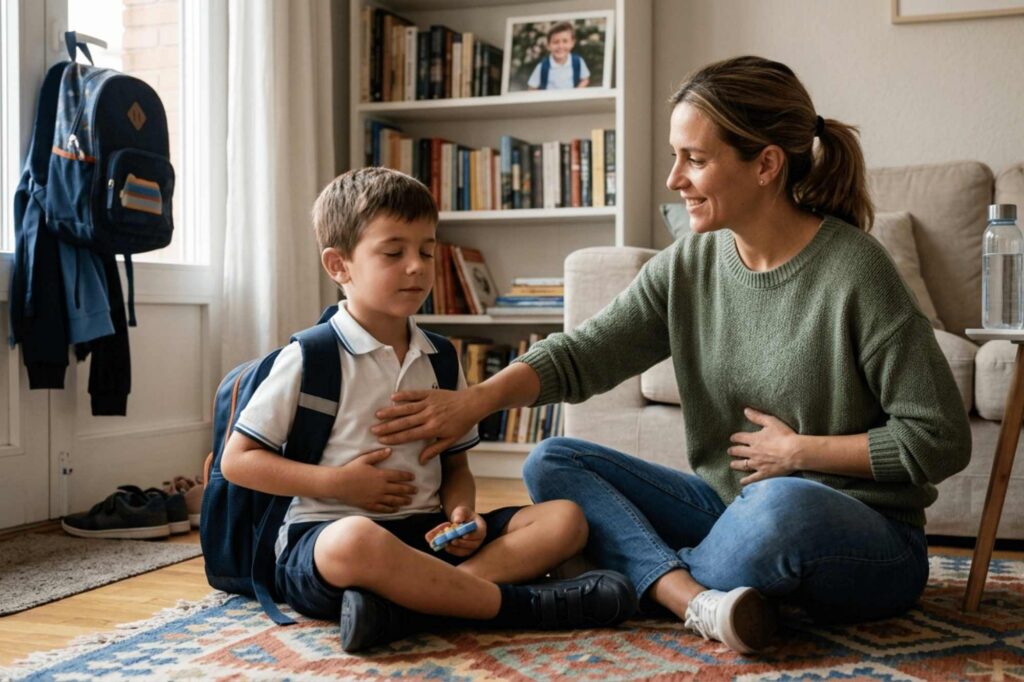
Openly discussing specific fears helps to reduce school anxiety and allows you to identify which specific aspects cause the most stress, whether it’s lunch, recess, or math.
In-person vs. virtual classes to reduce school anxiety
| Factor | In-person classes | Virtual classes (alternative) |
| Sensory stimuli | Loud noises, bright lights, crowds – can trigger academic stress | Low (controlled environment at home) – minimize fear of school |
| Social interaction | Mandatory and continuous – a common source of school anxiety | Manageable (chat, optional camera) – reduces social school anxiety |
| Learning pace | Accelerated and group-based – generates school fear due to pressure | Personalized – pauses and repetitions reduce school nervousness |
| Flexibility | Low (rigid schedule) – increases school concern | High (flexible schedules): alleviates anxiety about school |
| Family support | Limited during the day – may increase nervousness before classes | Constant support reduces academic stress |
Virtual education is an effective alternative for children with high academic stress, especially during periods of transition or sensory processing difficulties.
School anxiety solutions
There are multiple evidence-based approaches to addressing fear of the educational environment in a comprehensive way:
- Cognitive Behavioral Therapy (CBT): It has demonstrated high effectiveness (60-70% reduction in symptoms) by teaching children to identify and modify negative thought patterns that fuel nervousness about classes. Techniques such as cognitive restructuring, gradual exposure, and systematic desensitization allow them to confront their fears in a controlled manner.
- Personalized Educational Support: Adapting academic expectations, offering extended time, and providing individualized assistance reduces the pressure generated by school anxiety. Schools that implement reasonable accommodation plans (IDEA, 2004), such as preferred seating, sensory breaks, or oral assessments, observe a notable decrease in academic stress.
- Technological interventions: Adaptive learning platforms (such as Khan Academy or BrainPOP) and relaxation apps (Headspace for Kids) can be integrated into the daily routine to combat school anxiety through gamification and immediate feedback.
- Structured family involvement: Extracurricular activities that build confidence and social skills complement these solutions, creating a supportive ecosystem that surrounds the child and reduces school anxiety in all areas.
Calming back-to-school anxiety: Tips for parents and kids
With these tips, your child will gain confidence and you’ll find the peace of mind you need:
For parents:
- Start 14 days early: Gradually adjust sleep and meal times (15 minutes daily) to align with the school calendar.
- Visit the school: Explore the classroom, restrooms, and playground with your child. Meeting the teacher in a relaxed environment reduces fear of the school setting.
- And in the case of an online school, schedule a virtual meeting with the teacher: this creates a relaxed atmosphere that fosters trust, thereby reducing the student’s fear or anxiety.
- Create a visual calendar: Display the remaining days with positive images. This makes the abstract tangible and reduces school anxiety.
- Celebrate micro-achievements: Reinforce each step completed during the first few weeks to build self-efficacy in the face of academic stress.
For children:
- Practice your route to school several times, identifying landmarks that give you confidence (if they are not yet taking virtual classes and remain under the traditional class format).
- Choose your school supplies and clothes – having control over these decisions reduces the fear of going to school. Even though they are attending virtual classes, children also want to look presentable on camera.
- Establish a secret signal with your parents (e.g., touching their ear) to let them know when you need a break.
- Bring a familiar object – a photo or small stuffed animal will remind you that you are safe.
- Remember: Feeling nervous before class is normal, and many of your classmates experience the same thing (Virtual or not).
Virtual classes: The alternative that reduces school anxiety in children with special needs
For many children, virtual education has become a valuable option that significantly minimizes school anxiety. The home environment offers a controlled space where sensory stimuli are predictable and manageable, unlike the chaos of the physical classroom. Without intense social pressure, interaction with classmates and teachers becomes less intimidating, drastically reducing academic stress.
Virtual classes allow for:
- Immediate sensory breaks (5-10 minutes every hour) without stigmatization.
- Personalized learning pace – children progress when they are ready.
- Multimodal participation (chat, audio, video) – Multimodal participation (chat, audio, video) – children with selective mutism or severe school anxiety can express themselves in writing via chat during live sessions, reducing the pressure of oral communication.
- Flexible scheduling and review of recorded materials – this decreases school anxiety related to the fast pace.
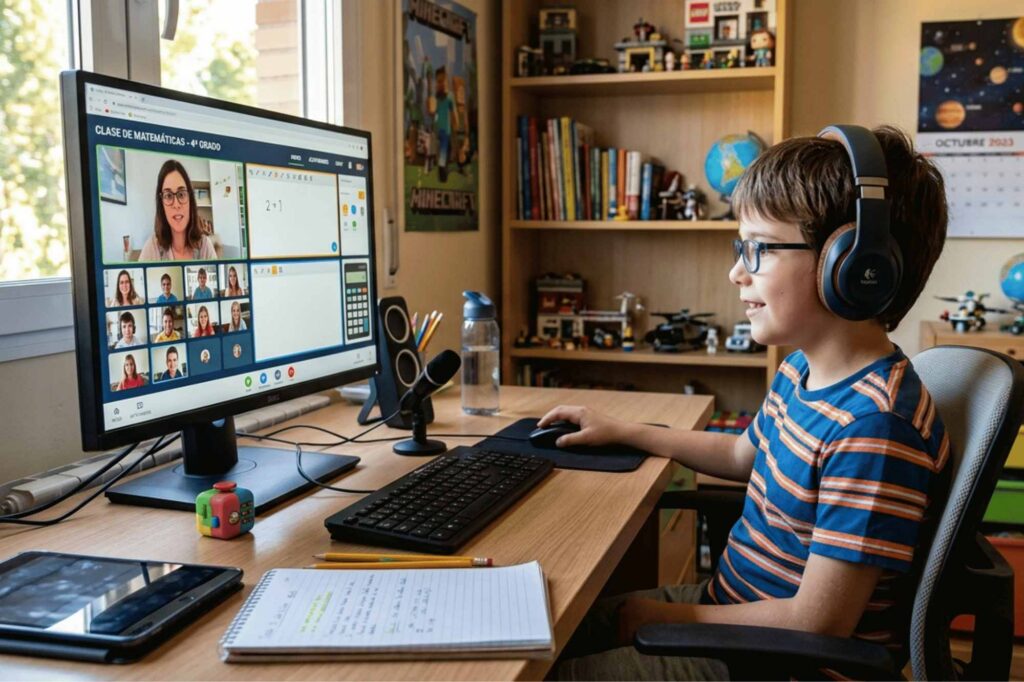
Furthermore, online education has the potential to foster autonomy and self-regulation, as children learn to manage their time and tasks with the support of their families, building confidence in their abilities. This approach not only reduces current academic stress but also develops executive skills that will be useful in future academic and professional challenges.
Expert recommendation: For children diagnosed with autism or ADHD, combining 2-3 days of online learning with 2-3 days of in-person learning can be the optimal balance to reduce school anxiety while maintaining gradual socialization.
Professional support for overcoming school anxiety
Overcoming the fear of going to school requires personalized strategies and, in many cases, specialized support. At MGM Behavioral, we understand your family’s unique challenges. Our certified ABA Therapy in Miami Florida offers evidence-based interventions for children with ASD, ADHD, and sensory processing disorders, with both in-person and virtual options. Schedule a consultation today and discover how we can help transform your child’s educational experience.
Frequently asked questions
We answer the most common questions parents have about school nervousness in children:
How long does children’s fear of going to school last?
Acute school anxiety usually lasts 2 to 4 weeks after the start of classes. If it persists for more than 2 months, a professional evaluation is recommended.
Do virtual classes worsen fear of the school environment?
No, for most children with sensory or social school anxiety, virtual classes significantly reduce symptoms by eliminating aversive stimuli.
When should I seek professional help for academic stress?
When academic stress interferes with sleep, eating, or daily activities for more than 6 weeks, or when there are recurring physical symptoms (headaches, vomiting).