The best solution for strengthening the bond between autism and friendship combines behavioral therapy, family practice, and school support. Research supported by the National Institutes of Health confirms that children on the autism spectrum (ASD) with strong social connections and friendships have a significantly lower risk of developing anxiety and depression in adolescence and adulthood, as positive relationships act as a key protective factor for their mental health. Below is a structured guide with actionable steps.
Effective strategies to strengthen autism and friendship in childhood
Strengthening the link between autism and friendship requires a comprehensive approach that combines specialized therapeutic support, social practices at home, school collaboration, and community involvement. Each of these pillars contributes to creating an environment where children diagnosed with autism can develop the skills necessary to connect with others in a meaningful way.
1. How does ABA therapy help improve social connections and friendship in autism?
Before focusing on socialization, it is crucial to address any challenging behaviors that may be interfering with a child’s ability to connect with others. If a child exhibits behaviors that put themselves or others at risk, or that severely hinder interaction, seeking professional help is the first step.
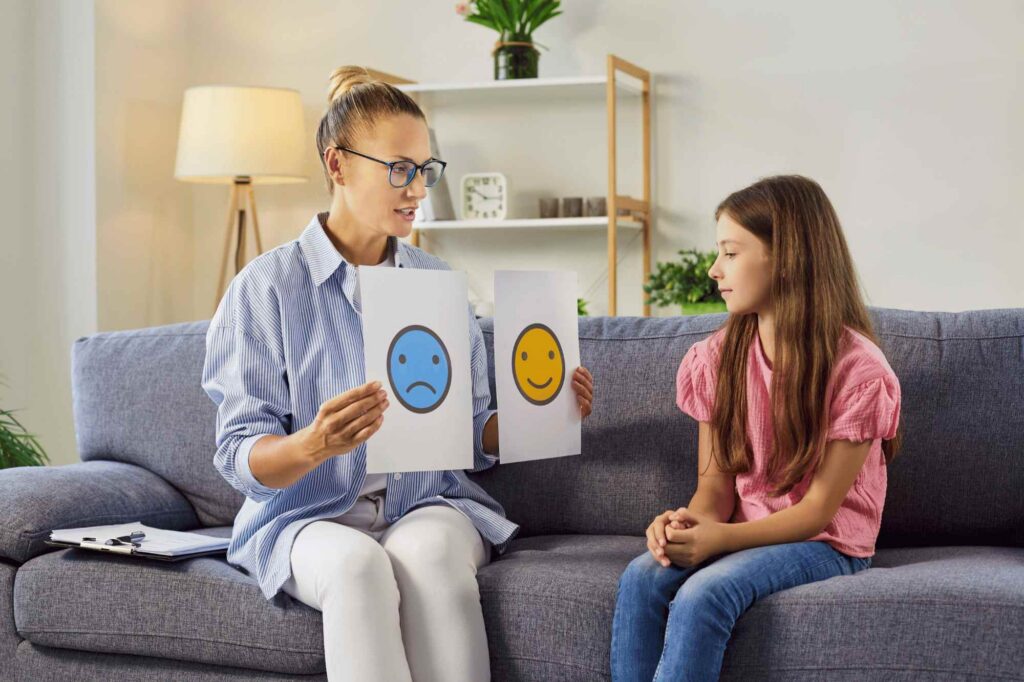
Applied Behavior Analysis (ABA) therapy is an evidence-based tool that has proven effective in teaching social skills and reducing problematic behaviors. A Certified Behavior Analyst (BCBA) can design an individualized plan to teach appropriate behaviors and communication skills. By improving a child’s ability to express their needs and regulate their emotions, a foundation is laid for them to engage in positive social interactions, thus facilitating the development of both social skills and friendships. This strong foundation is essential for the child to take the next step in their social journey.
| Key component | Benefit to strengthen the bond between autism and friendship |
| ABA therapy | It teaches basic social skills and reduces challenging behaviors. |
| BCBA | Design personalized plans for each child |
| Functional communication | It allows the child to express needs and emotions |
| Emotional regulation | Facilitates positive interactions with peers |
2. How to create socialization opportunities within the family environment?
The family environment is the first and safest social laboratory for any child. Siblings, cousins, and other close relatives offer frequent, daily opportunities to practice fundamental social skills in a trusting context. Taking advantage of these moments can have a profound impact on the relationship between autism and friendship.
You can structure games that require taking turns, such as board games, or activities that involve borrowing and sharing. Role-playing, where everyday situations are acted out, is also an excellent tool. For example, creating a scenario to practice waiting one’s turn to speak or to use a favorite toy helps the child internalize social norms such as active listening and conflict resolution. These skills, practiced at home, become the foundation for the child to learn how to making friends with autism outside the home.
3. What role do support groups play in autism and friendship?
The support a child receives at home is greatly enhanced when extended to the community. Social networks and local support groups are invaluable resources for families navigating the journey of autism and friendship. These groups not only offer a space to share experiences and advice but also facilitate the organization of social gatherings.
Finding out families with children on the spectrum who attend the same school or live in the same area can be especially beneficial. This can help the child feel more comfortable and supported in the school environment. Activities such as Special Olympics, Sensory Sundays, or local social events designed to be inclusive are excellent starting points for children to practice autism social in a more structured and supportive setting.
4. How to set social goals in the IEP to strengthen autism and friendship?
School is a central setting in a child’s life, and collaboration with the educational team is essential. The Individualized Education Program (IEP) should not only address academic goals but also include clear and measurable social goals to strengthen the link between autism and friendship in the school setting.
Schedule a meeting with the IEP team and, if possible, invite your child’s Child Behavior Checkpoint Assistant (CBBA). Together, you can discuss your child’s progress and challenges in the social area and set concrete goals, such as initiating a conversation, joining a game at recess, or working as a team on a class project. Consistency between goals at school and therapy outside of school is key to success. At this point, it is important to remember that autism and friendship skills are not innate but are taught and reinforced with appropriate practice and support.
Autism and friendship skills: A focus on explicit instruction
Friendship skills are not always learned naturally. For children on the autism spectrum (ASD), explicit and structured instruction is crucial. This involves breaking down complex skills into smaller, more manageable steps. For example, instead of simply saying “make friends,” concrete steps can be taught, such as:
- Approaching a classmate and smiling.
- Saying “hello.”
- Asking a question about an activity they are doing.
- Waiting for a response.
- Commenting on it.
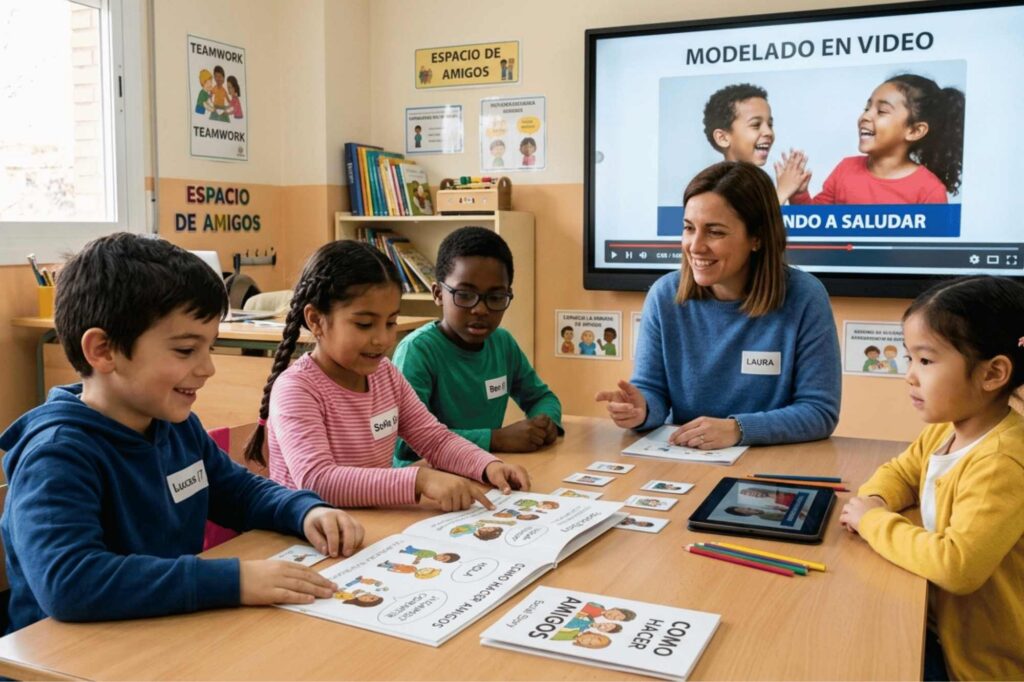
Social stories, scripts, and video modeling are effective tools for this purpose. By practicing these skills repeatedly and in different contexts, the child gains confidence and competence, transforming the abstract concept of “friendship” into a series of concrete and achievable actions.
Scientific evidence supports that connections between autistic individuals are often especially meaningful. A 2025 study of 592 university students found that young people on the spectrum reported similar levels of satisfaction and closeness in their friendships compared to their non-autistic peers, but tended to have a higher proportion of autistic or neurodivergent friends. This phenomenon, known as “autistic homophily,” suggests that autism and aspergers friendship society thrive when there is a shared understanding of sensory and communicative experiences, challenging the myth that autistic people prefer social isolation.
5. How to plan social activities outside of school?
Opportunities for socializing extend far beyond the classroom. Participating in extracurricular activities and weekend plans with other families provides a natural and less structured context for practicing learned skills. Many ABA therapy centers offer after-school social skills groups where children can interact in a safe and supportive environment. These groups are fertile ground for cultivating autistic friendships in an atmosphere of mutual understanding.
Similarly, parents can also benefit from interacting with other parents at school events or meetings. These connections can lead to playdates or group outings. Like children, parents of children with ASD sometimes face the concern that their child with high functioning autism no friends. It is important to remember that friendship is a process, not a destination, and that every step, no matter how small, is progress. Encouraging participation in interest clubs, art classes, or adapted sports can significantly expand a child’s social circle.
Keys to success in autism and friendship
The most decisive factor for success in autism and friendship is not the severity of symptoms, but rather the consistency in applying strategies. Parents who integrate IEP goals with at-home activities and ABA sessions achieve remarkable progress in less than six months. Another key finding is that children on the autism spectrum (ASD) respond best to environments where they are allowed to lead interactions rather than being forced to follow rigid rules. This approach, supported by peer-reviewed research from the American Psychological Association (APA), has been shown to significantly reduce social anxiety in children with autism spectrum disorder, with effect sizes ranging from small to moderate, and improve key aspects of social interaction, such as communication and reciprocity with peers.
A path to connection: Take the first step
Every small step forward in a child’s social skills is a victory worth celebrating. At MGM Behavioral, we understand the challenges and the importance of building meaningful social connections. Our team of professionals is dedicated to providing high-quality, individualized support. If you’re ready to begin this journey and need expert guidance, we invite you to contact us. Discover how our ABA Therapy in South Florida can make a difference in the lives of your child and your family.
Frequently asked questions
Clear answers to the most common questions about building social connections in autism spectrum disorder:
At what age should children on the spectrum begin working on friendship skills?
Experts recommend starting explicit social skills instruction around age 3 or 4, when the brain is at its most plastic for learning social norms.
How long does it take to see progress in autism and friendship?
With consistent ABA therapy (15-20 hours per week) and practice at home, many parents report visible improvements in social interaction within 3 to 6 months.
What should I do if my child has high-functioning autism and no friends at school?
Request a meeting with the IEP to include specific social goals, and look for extracurricular activities where they can share interests with other children.