

The best way to handle an emotional crisis in children with ASD is to identify sensory triggers, implement a consistent reward system, and stay calm as an anchor. When a child experiences sensory overload, their reactions can be intense, but learning how to manage emotions your child’s allows you to anticipate these moments, use rewards at home, and coordinate with school staff. There are no magic solutions, but strategies based on ABA therapy gradually reduce tantrums. This step-by-step guide helps you restore calm in minutes, celebrating small victories without punishment.
Learn how to manage emotions your child’s with these clear and effective strategies
There is no single formula for calming a crisis in children with ASD. Sensory overloads trigger intense reactions, and knowing how to respond appropriately can be overwhelming. While there are no magic wands, there are specific tactics. The key lies in learning how to manage emotions your own and your child’s, using calmness as your anchor. Only then will you be able to apply effective strategies and restore calm in minutes.
How can you identify the triggers of an emotional outburst?
Understanding the root cause of a tantrum is a key strategy. The reasons vary: refusing to do homework, nervousness before school, embarrassment over poor performance, or difficulty separating from parents. Outbursts can also be triggered by environmental factors such as classroom temperature, the arrival of new students, or changes at home.
Learning how to manage emotions your child’s starts with observing and noting the time, place, and triggers. Once identified, you can anticipate or avoid them. If your child can talk, speak with them to get to the root of the problem. If they don’t communicate verbally, pay attention to gestures, posture, or sounds. That’s also how to manage emotions through empathy and active observation comes in. It’s not always necessary to know the exact cause, but understanding where the distress comes from makes it easier to address. Sometimes you remove the trigger; other times, you simply give them space to rest.
According to a publication in Autism Parenting Magazine (2026), “the duration of meltdowns in children with ASD depends largely on the type of support they receive, their environment, and the factors that trigger them.” That’s why it’s vital that you learn how to control your emotions during a tantrum. Your calmness is the anchor that prevents the situation from escalating. Breathe, stay composed, and remember: you’re not trying to win a battle, but to contain and reconnect.
What strategies can you use at home to prevent tantrums?
An effective way to set clear expectations is to implement a reward system. Create a chart with your child to define desired behaviors. Use pictures if that makes it easier for them. Explain the goals and rewards to them. Rewards don’t have to be tangible; they can be experiences like playing a special game before bedtime or making a dessert together.
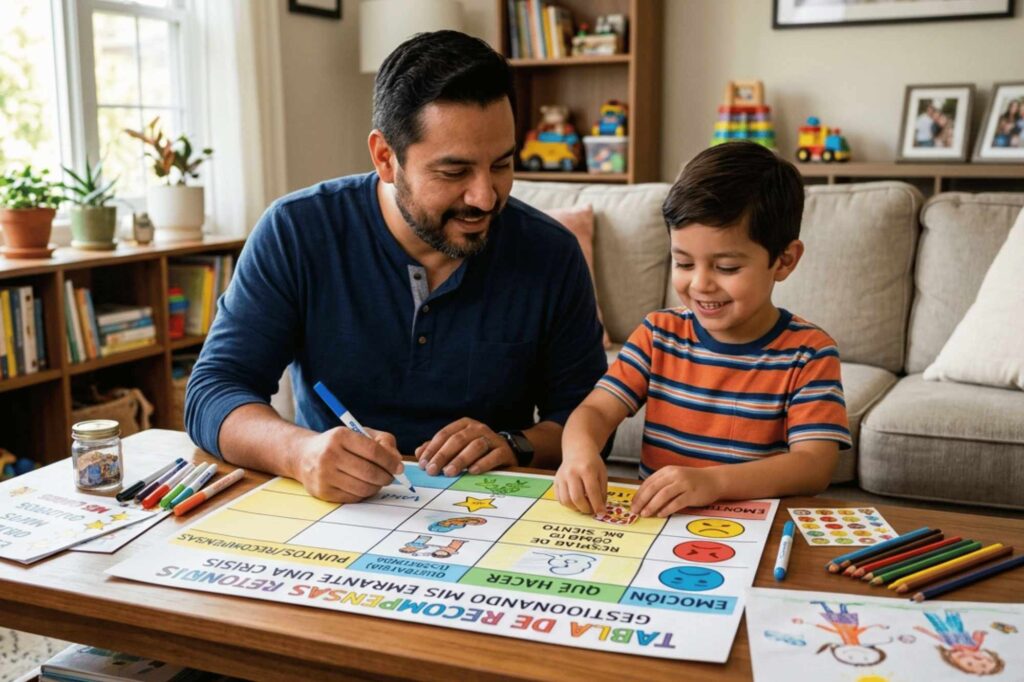
This approach teaches how to manage emotions by associating positive actions with pleasant consequences, fostering self-regulation and reducing meltdowns through calmness and family connection.
Rewards based on behavioral goals
| Behavioral goal | Suggested reward | Ideal frequency |
| Sharing or taking turns | Token + special bedtime game | Daily |
| Good sportsmanship after losing | Token + making dessert together | Every 2–3 days |
| Picking up materials without complaining | Token + 10 extra minutes of TV | Daily |
| Green report card | 1 hour of TV or 3 tokens | School day |
| Yellow report card | 30 minutes of TV or 2 tokens | School day |
As you design the chart, it’s essential to teach him how to manage emotions his through daily activities:
- Taking turns: Explain that you’ll play together with his toys. After a minute, kindly ask him to let you use his favorite toy. If he agrees to take turns without protesting, he’ll earn a token or a small reward. This helps him learn to wait his turn and share.
- Good sportsmanship: Play a short game. Ask them if they want you to let them win the first round. In the second round, warn them that you’ll try to win. If you manage to win and they say “good game” with a genuine smile, they receive their reward. This fosters resilience in the face of frustration and respect for the rules.
- Activity: Tell them that in two minutes you’ll ask them to pick up their crayons. If they put them away quickly when the time is up, they’ll get a token. Start with very simple goals and gradually reduce the warning time. With practice, these interactions will become natural and routine, reinforcing emotional self-regulation without the need for punishment.
How can you coordinate with the school to manage emotional crises?
Dealing with crises at school is difficult because you aren’t there. If the school provides daily behavior reports, use them to assess progress. Many schools use a color-coded system: green (good behavior), yellow (slightly disruptive), and red (crisis). If this system isn’t in place, ask the teacher to implement it.
Integrate those reports into your reward system. For example: green = 1 hour of TV or 3 tokens; yellow = 30 minutes or 2 tokens; red = 15 minutes or 1 token. Why reward a negative rating? Because the reward isn’t for the crisis itself, but for bringing the report home and being honest. If the child believes they’ll lose everything, their frustration will increase. Remember: it’s a reward system, not a punishment system. Reinforce the positive without excessive severity. That balance is a fundamental part of how to manage emotions both at home and at school.
Keep in mind that report cards don’t reflect the whole picture. Multiple factors come into play, and behaviors vary depending on the setting (classroom, playground, doctor’s office). Don’t assume solutions are set in stone. Stay flexible and adapt strategies to each scenario. Learning how to manage emotions in different contexts takes practice and patience.
Why is it important to follow the rules and celebrate small victories?
Once the rules are set, stick to them without exceptions. Avoid negotiating: consistency builds confidence. Start with achievable goals. Accept that children make mistakes and that everyone has tantrums. Don’t aim for perfection, but for progress.
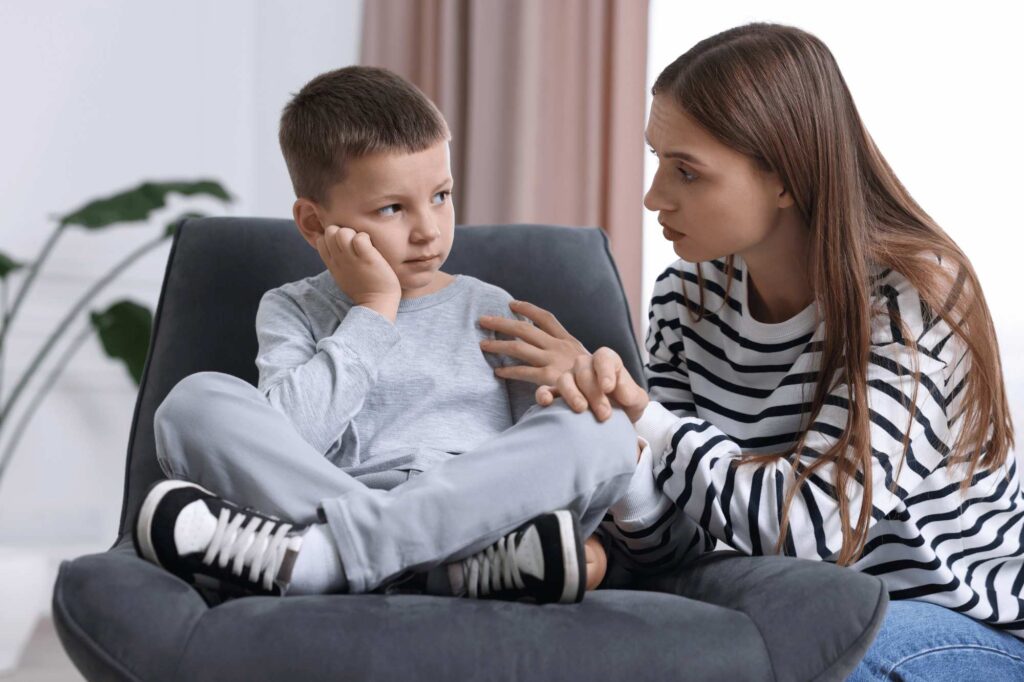
Remember to stay calm and composed. Your calmness is the foundation for teaching them how to manage emotions effectively. Have realistic expectations: meltdowns won’t disappear overnight. It’s a slow process that requires patience. Check in daily and celebrate every small achievement. When they reach a goal, acknowledge it enthusiastically. This reinforces their motivation and builds a more peaceful relationship.
Applying how to manage emotions skills day by day transforms crises into learning opportunities. Constant observation, well-designed rewards, and coordination with the school are your best allies. You are not alone on this journey.
Your calmness is the first step toward change
Learning how to manage emotions of a child with ASD is not a destination, but a journey of patience, observation, and consistency. At MGM Behavioral, we use ABA Therapy to turn every crisis into an opportunity for connection and learning. You are not alone in this process: how to help mental health starts with seeking professional support. Take the first step today. Contact our team and start building, step by step, the peace of mind that you and your child deserve. Serenity is not a luxury—it is an achievable goal.
Frequently asked questions
Answers to the most common questions that arise when applying these strategies, from response time to how to handle situations in public, always with a practical, evidence-based approach:
How long does it take to see results?
Between 2 and 4 weeks with daily consistency. A significant reduction in episodes may take 3 to 6 months.
What should I do if my child has a meltdown in public?
Stay calm, move to a quiet space if possible, reduce stimuli (lights, noises), and apply the same calming techniques.
Is ABA Therapy effective for all children with ASD?
Yes. ABA Therapy is recognized by the CDC and WHO as the approach with the strongest scientific evidence.
Can I combine rewards with other methods?
Yes. Reward systems are enhanced by sensory-adapted environments and predictable visual routines.