
A child who takes 20 minutes to get dressed, loses track of simple directions, or melts down after a school day is not necessarily being defiant or careless. These patterns can have many causes. ADHD testing for children gives families a structured way to understand what may be driving the behavior and what kinds of support can make daily life more manageable.
For many parents, the question is not simply, “Does my child have ADHD?” It is, “Why are mornings so hard?” “Why does homework turn into a battle?” or “Why can my child focus deeply on one activity but struggle with another?” A thoughtful evaluation can replace guesswork with useful information, helping parents, educators, and care providers respond to the child in front of them.
When ADHD Testing for Children May Be Helpful
Attention-deficit/hyperactivity disorder, commonly called ADHD, can affect attention, impulse control, activity level, emotional regulation, and organization. Its signs look different from one child to another. Some children are constantly in motion and act before thinking. Others seem quiet, daydreamy, forgetful, or easily overwhelmed. Many show a combination of these patterns.
Testing may be worth considering when challenges are persistent, affect more than one setting, and interfere with a child’s learning, relationships, routines, or confidence. A child may struggle at school but appear calmer at home, or hold it together all day and unravel after getting home. Neither pattern rules ADHD in or out. Context matters, which is why a complete evaluation looks beyond one difficult moment or one report card.
Parents often seek an evaluation after teachers share concerns about focus, unfinished work, calling out, or trouble following classroom routines. Other families notice frequent conflict around transitions, bedtime, chores, or getting out the door. Some children become discouraged because they know what they want to do but cannot consistently organize themselves to do it.
ADHD is not caused by poor parenting, a lack of discipline, or a child simply not trying hard enough. At the same time, an ADHD diagnosis is not the only explanation for attention or behavior concerns. Anxiety, learning differences, sleep difficulties, language delays, sensory needs, autism, changes at home, and medical concerns can create similar symptoms. The goal of testing is not to place a label on a child. It is to understand the full picture accurately.
What a Comprehensive ADHD Evaluation Includes
There is no single blood test, brain scan, or short questionnaire that can diagnose ADHD on its own. A quality assessment uses multiple sources of information and considers how a child functions across everyday environments.
The process usually begins with a detailed parent interview. Families may be asked about pregnancy and developmental history, medical concerns, school experiences, family history, friendships, routines, strengths, and the situations where challenges are most likely to occur. This conversation matters because behavior has a context. A child who avoids homework, for example, may be struggling with sustained attention, reading demands, anxiety about mistakes, or several factors at once.
A clinician may also gather information through standardized rating scales completed by parents, teachers, or other adults who know the child well. These tools compare a child’s behaviors with what is expected for children of a similar age. School input is especially valuable because ADHD symptoms must be considered across settings, not only during a clinical appointment.
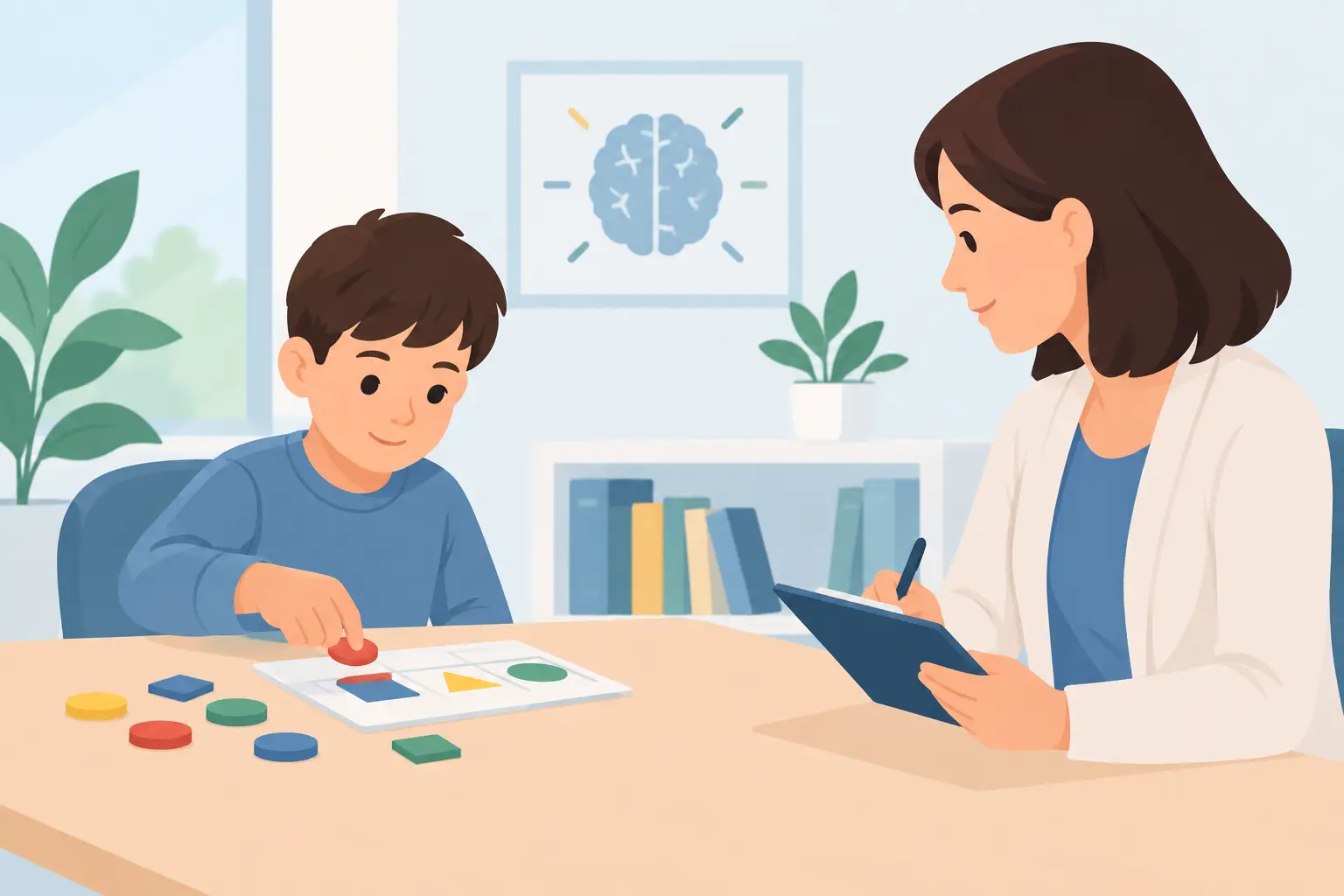
Depending on the child’s needs, an evaluation can also include direct observation, developmental screening, cognitive or academic testing, and assessment for emotional or behavioral concerns. These components help clarify whether ADHD is present and whether another condition may be contributing to the child’s difficulties.
A comprehensive evaluation commonly considers:
- attention, working memory, organization, and follow-through
- hyperactivity, impulsivity, and safety awareness
- emotional regulation, frustration tolerance, and behavior patterns
- learning, communication, social development, and sensory needs
- sleep, medical history, family stressors, and daily routines
The exact process depends on the child’s age, developmental profile, and concerns. Preschoolers, for example, naturally have shorter attention spans and need more movement than older students. Clinicians must distinguish expected developmental behavior from patterns that are unusually frequent, intense, or disruptive for that child’s age and setting.
What Parents Can Expect During the Process
An evaluation should feel respectful and child-centered, not like a child is being put on trial. Children are more than a list of symptoms. They have interests, abilities, relationships, preferences, and environments that can either support or strain their skills.
Before the appointment, it can help to write down specific examples. Rather than saying, “My child never listens,” describe what happens: “When I give three steps for getting ready, my child starts the first step, gets distracted, and needs repeated reminders.” Concrete examples help the clinician identify patterns and ask more useful follow-up questions.
Bring relevant records when available, such as report cards, teacher communications, school evaluations, prior therapy records, medication information, or notes from a pediatrician. You do not need to have everything perfectly organized. The evaluation team can help identify what information is needed.
Parents should also expect questions about what is going well. A child may be creative, curious, deeply caring, energetic, funny, or highly focused on subjects they enjoy. Strengths are not separate from treatment planning. They can become practical starting points for building skills, motivation, and confidence.
A Diagnosis Is a Starting Point, Not the Whole Story
If a child meets criteria for ADHD, the results should lead to a clear conversation about next steps. Recommendations may include behavioral therapy, parent coaching, school accommodations, support for executive-function skills, coordination with the child’s pediatrician, or medication discussions with an appropriate medical provider. The right plan depends on the child and family.
Behavioral support is often most effective when it reaches beyond the therapy setting. A child may need visual routines at home, a simpler homework system, planned movement breaks, clear expectations, and consistent responses from the adults around them. Parents do not need to become therapists. They need strategies that fit real mornings, real work schedules, and real family life.
For children with emotional outbursts or challenging behavior, it also helps to look at what happens before and after the behavior. Is the child hungry, overstimulated, confused by a task, worried about getting something wrong, or trying to escape a demand that feels impossible? Understanding those patterns can reduce conflict and teach more effective ways to communicate needs.
At MGM Behavioral, evaluations and family-centered behavioral support are designed to turn clinical insight into practical tools. The purpose is not just to identify a concern. It is to help children build skills in communication, independence, emotional regulation, and everyday routines while giving caregivers guidance they can use at home and in the community.
How to Talk With Your Child About Testing
Children often take their cues from the adults around them. Present the evaluation in calm, simple language: “We are meeting with someone who helps us understand how learning, focusing, and big feelings work for you.” Avoid framing it as a punishment or as proof that something is wrong.
Older children may have questions about ADHD after hearing the term at school or online. Be honest without making the diagnosis their entire identity. You might explain that some brains need different supports for paying attention, managing impulses, or keeping track of tasks. The evaluation is meant to identify supports that help life feel less frustrating.
If your child is nervous, tell them what they can expect, including that they may talk, play, answer questions, or do activities with a clinician. Let them know there are no “good” or “bad” answers. Their job is simply to be themselves.
Clear Answers Can Create More Room for Progress
Waiting for concerns to disappear on their own can leave a child feeling misunderstood and leave parents exhausted by trial and error. On the other hand, testing does not mean rushing to conclusions. A careful evaluation makes room for nuance, considers other explanations, and identifies supports that match the child’s actual needs.
Whether the results point to ADHD, another developmental or emotional concern, or a need for targeted behavioral strategies without a diagnosis, families can move forward with greater clarity. One well-understood routine, one school support, and one new way to respond during a hard moment can begin to change the rhythm of family life.