
Receiving an autism diagnosis for a child leads parents to seek the best possible intervention. The strongest scientific recommendation points to Applied Behavior Analysis (ABA), an evidence-based therapy that has proven its effectiveness. However, choosing the most appropriate ABA program can be an overwhelming challenge, especially for families who are new to this methodology and its terminology. In this article, we explore a comprehensive option that seeks the best of both worlds: the benefits of a hybrid model. This approach synergistically combines specialized, structured intervention in centers with skill generalization, parent training, and ongoing support at home, creating a coherent learning ecosystem.
Discover how an ABA program in dual settings maximizes potential and effectiveness
A belief shared among advocates of Applied Behavior Analysis (ABA) is that “the ABA program can be carried out anywhere.” While this statement is true in terms of flexibility, it is crucial not to underestimate the profound influence of the environment on therapy. The space where the intervention takes place is not simply a setting; it is an active and fundamental component of the teaching process.
Controlling and structuring the environment is, in fact, a key therapeutic tool for facilitating learning and reducing interference. Therefore, the deliberate choice of environment, whether a specialized center, the home, or a combination of both, is not insignificant. This strategic decision determines the available stimuli, opportunities for practice, and generalization of skills, directly influencing the design of teaching and, ultimately, the pace and quality of the individual’s progress.
When designing an ABA program for young children with autism, the most common teaching environments are usually specialized centers, schools (public or private), and the home itself. Although scientific evidence does not point to a single ideal model, clinical and family experience points to a growing trend: combining the best of both worlds. This hybrid model integrates the structure and control of a specialized clinical environment with the spontaneity and relevance of natural contexts, such as the home or daycare.

This fusion allows for more robust therapy. At the center, fundamental skills can be taught and strengthened intensively. Subsequently, in the natural environment, these skills are generalized, practiced, and adapted to real-life situations. This maximizes their functionality and consolidates learning in a comprehensive and lasting way.
5 Key benefits of an ABA program in dual settings
An ABA program that integrates intervention at school and at home enhances the child’s learning in a comprehensive way. Here are its five main benefits:
1. Develop social skills consistently with the children in their environment
For consistent social teaching, it is essential that peers are available on a regular basis. In this regard, a specialized clinical setting is ideal, as it ensures constant access to other children. This allows for structured practice and generalization of target interaction skills.
The ultimate goal, however, is for the child to be able to apply these skills in real life. This means interacting with their siblings, classmates, and neighbors. This is where the home component becomes invaluable. It allows the therapist to model and reinforce those same skills alongside the most significant people in the child’s immediate environment, ensuring that learning is relevant and sustained, even if natural opportunities for practice are less frequent than in the clinic.
2. Controlled environment vs. natural environment: The best of both worlds
A multi-environment intervention model offers the best of both worlds. On the one hand, technicians can address the most challenging skills in a controlled, distraction-free clinical setting, ideal for initial acquisition. On the other hand, they maintain access to the natural environment of home or school, with its distractions and everyday dynamics. This is crucial for an essential purpose: to ensure that the skills learned are generalized, practiced, and put to real use within the contexts where they matter most, thus guaranteeing their functionality and permanence.
3. Consistency in implementing the behavior plan
Inconsistency in handling challenging behavior encourages its persistence, especially when it is handled differently depending on the environment. This can even intensify it. The most effective solution is to implement a unified and consistent strategy throughout the day. A well-structured ABA program prioritizes this consistency. When professionals apply the same plan both at the center and at home, a clear and consistent model is created. This, in turn, empowers and guides family members to replicate the same support strategies. Such replication is essential for success and generalization of progress. Professionals must be accredited by the CASP (BHCOE) and/or obtain BACB certification.
4. Assessment of skill generalization
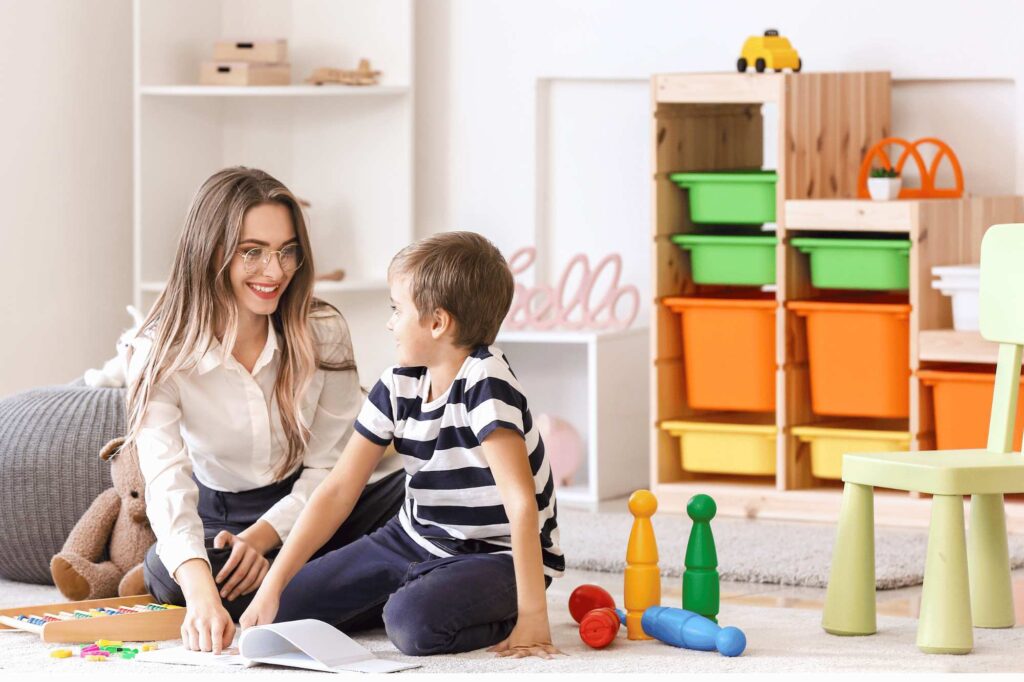
An effective ABA program should prioritize skill generalization, and a multisite model is ideal for achieving this. This approach allows generalization to be addressed proactively from the start of treatment. Strategies may vary: a skill can be taught simultaneously in the clinical and natural environments (such as the home), or it can be introduced and mastered in a controlled context and then systematically tested and reinforced in the other. This ensures that learning is functional and applicable in everyday life.
5. Ease of working in a group vs. ease of training parents: you get both!
The richness of an educational environment lies, to a large extent, in the presence of other people. An ABA program based in a specialized center offers the advantage of having other children around on a constant basis. This facilitates spontaneous social interaction, peer observation learning, and group instruction. In this way, these crucial components of therapy can be worked on regularly and in a structured manner.
On the other hand, holding the sessions at home optimizes parents’ availability for training and direct participation. A multi-site model, which integrates both contexts, allows the child to access these two complementary dimensions in a balanced way: structured socialization with other children and generalization of skills with their primary support network, thus maximizing the benefits of learning.
Your partner in the process
The success of any ABA program depends on close collaboration between the family and their therapeutic team. This collaboration is essential for personalizing each goal. At MGM Behavioral, we understand this. We offer ABA Therapy in South Florida with an individualized approach and a collaborative effort. Ready to build the ideal path for your child? Contact us today.